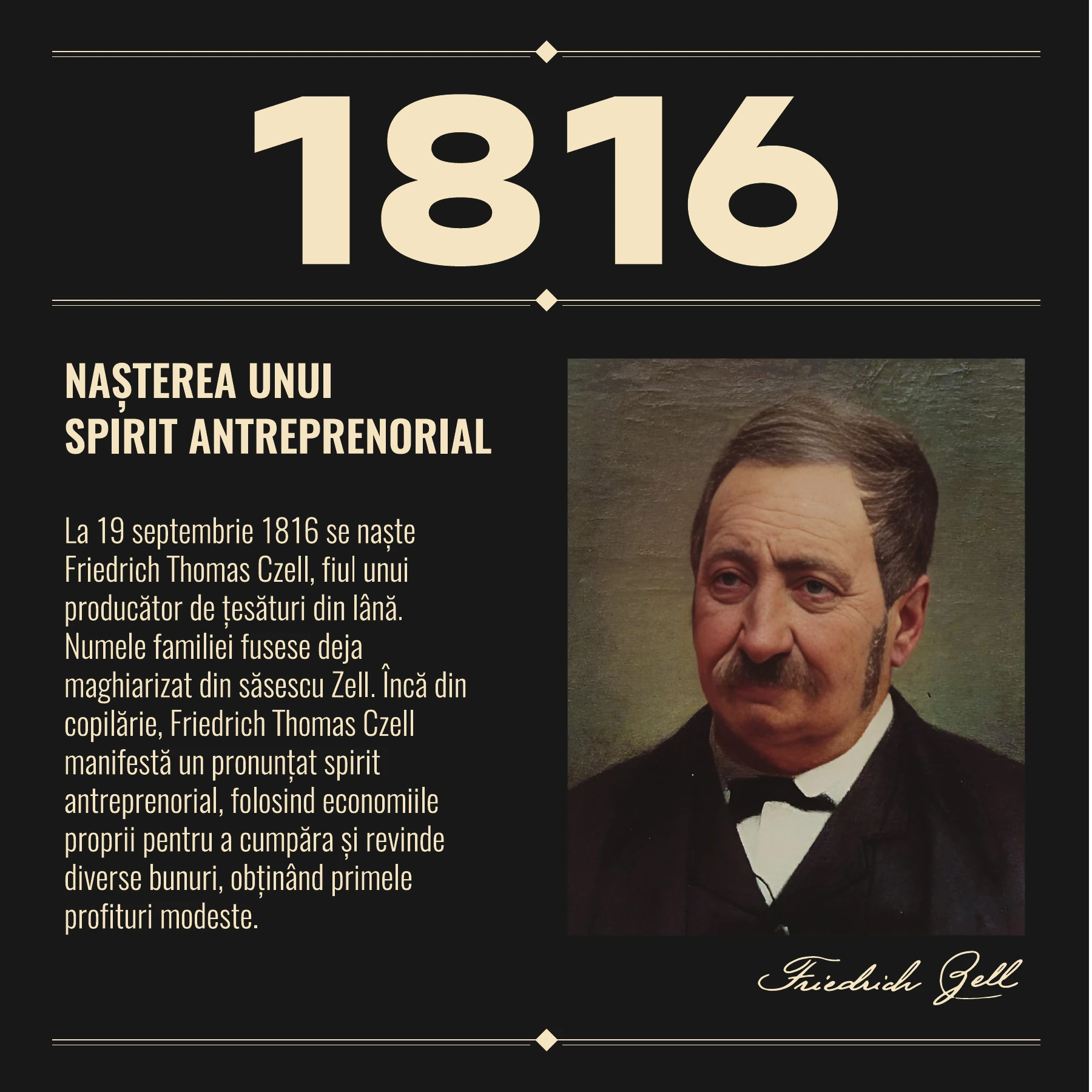
1816
An entrepreneurial spirit is born
From 1816 to today
Two centuries of a Brașov family of entrepreneurs: wool, spirits, the brewery in Dârste, the family's city palaces, wars and oblivion, then the recipe found again and Czell beer brought back to life.
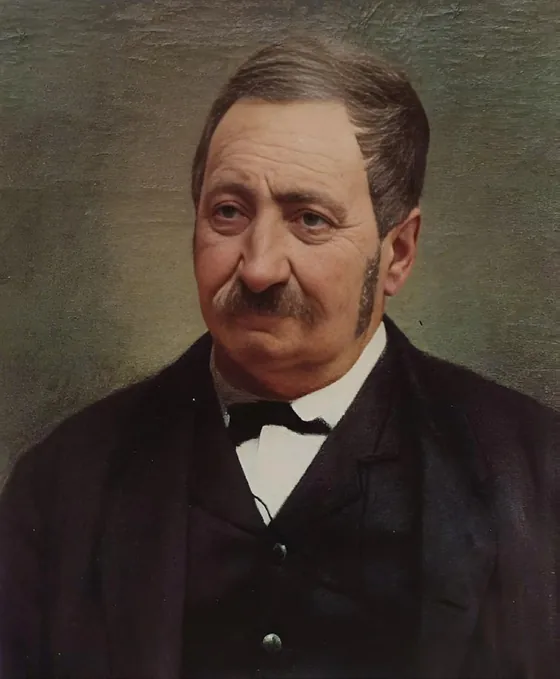
A tradition that began in 1893. A recipe recovered from history. A beer brought back to life, just as it was first created.
Starting from the original recipe and the methods of the time, the beer was faithfully recreated in the present, continuing a tradition that began in Transylvania at the end of the nineteenth century.
The buildings in the city that still bear the family name remain here more than a century later, and we set out to bring back to Brasov's tables the beer they left behind.
The illustrated chronicle
Pick a year from the bar or keep scrolling: each board tells one chapter, with documents, photographs and adverts of the time.
Tap a board to read it full size.
The boards are in Romanian, as they hang in the museum; each one has its English heading above it.
1816
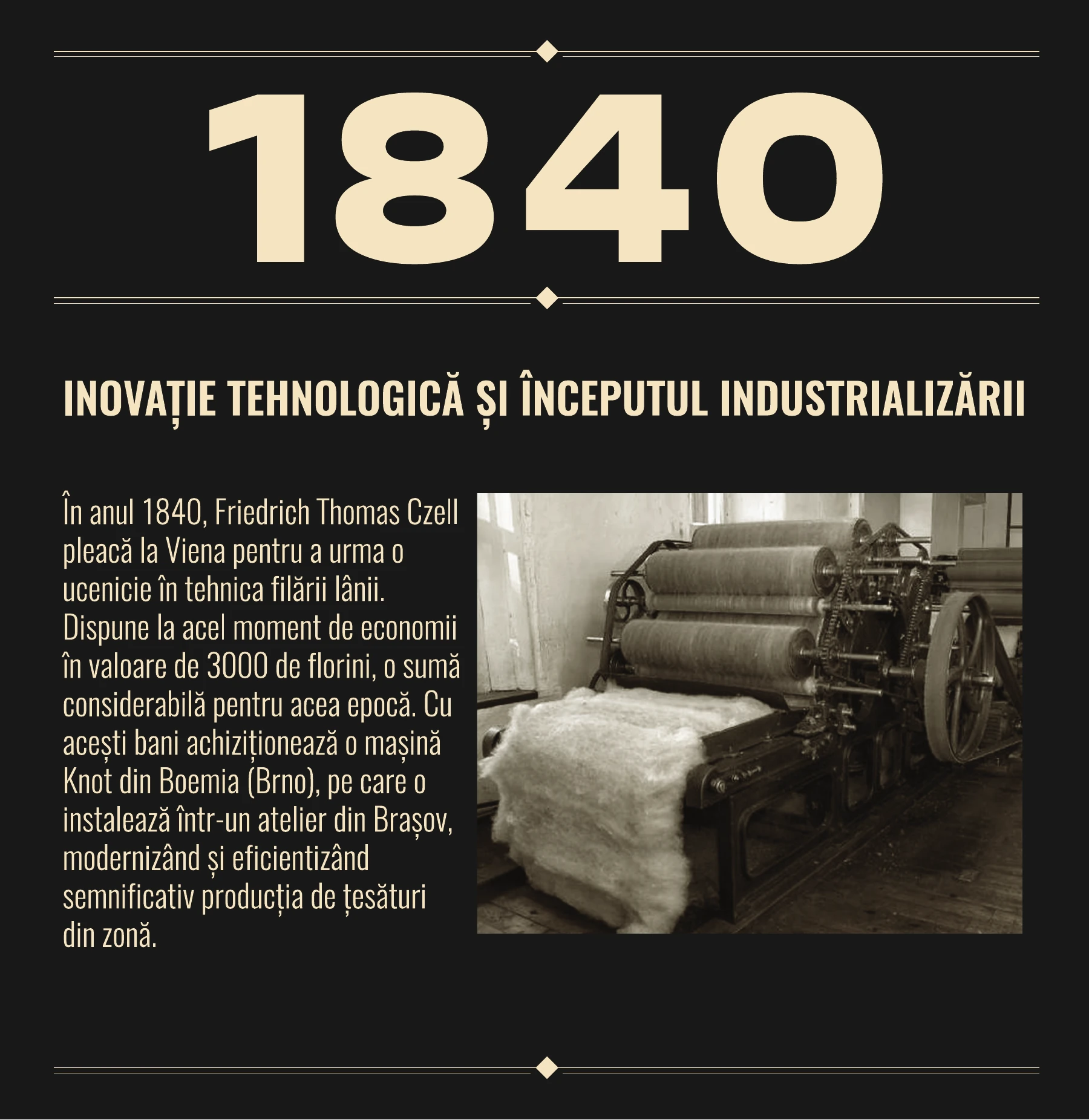
1840
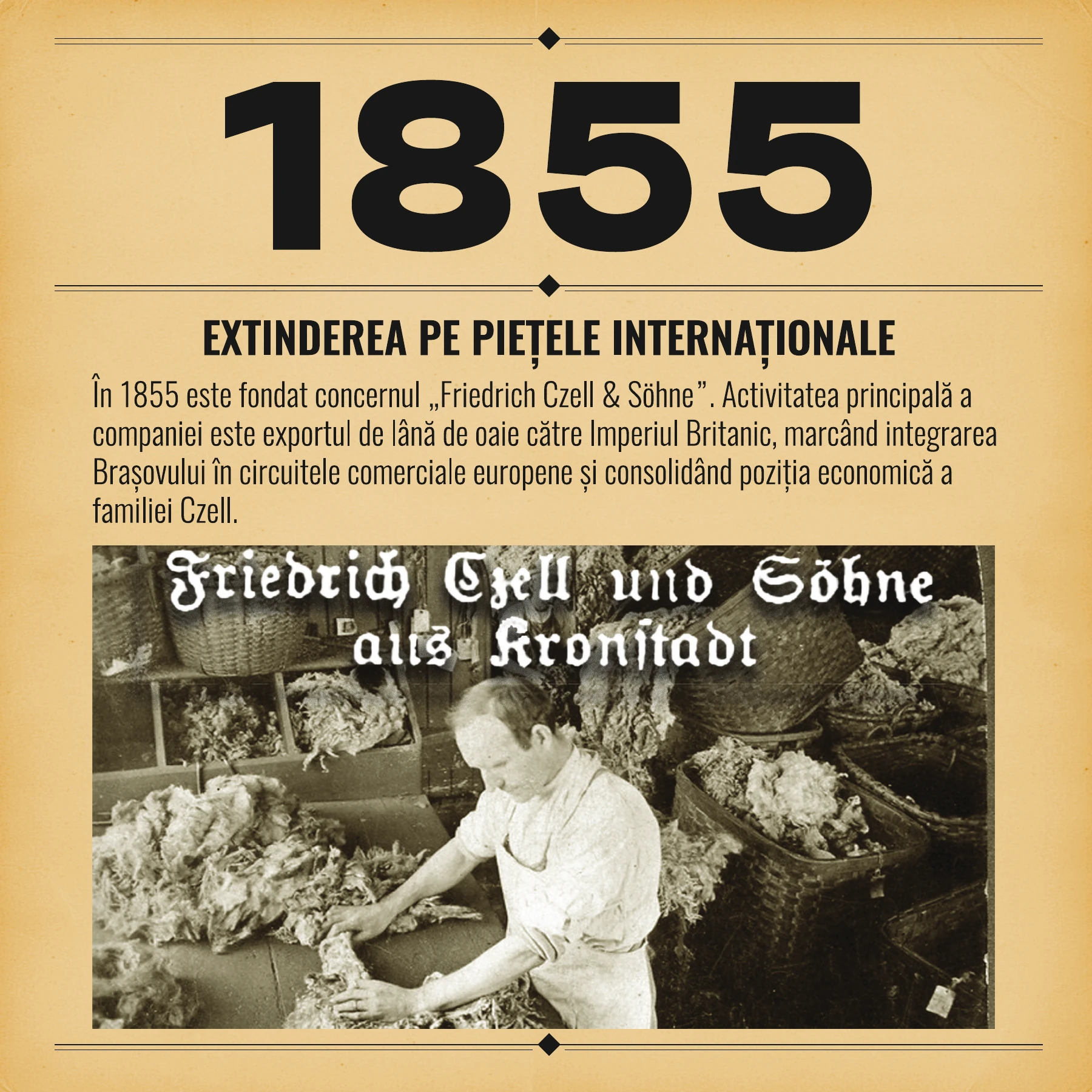
1855
1860
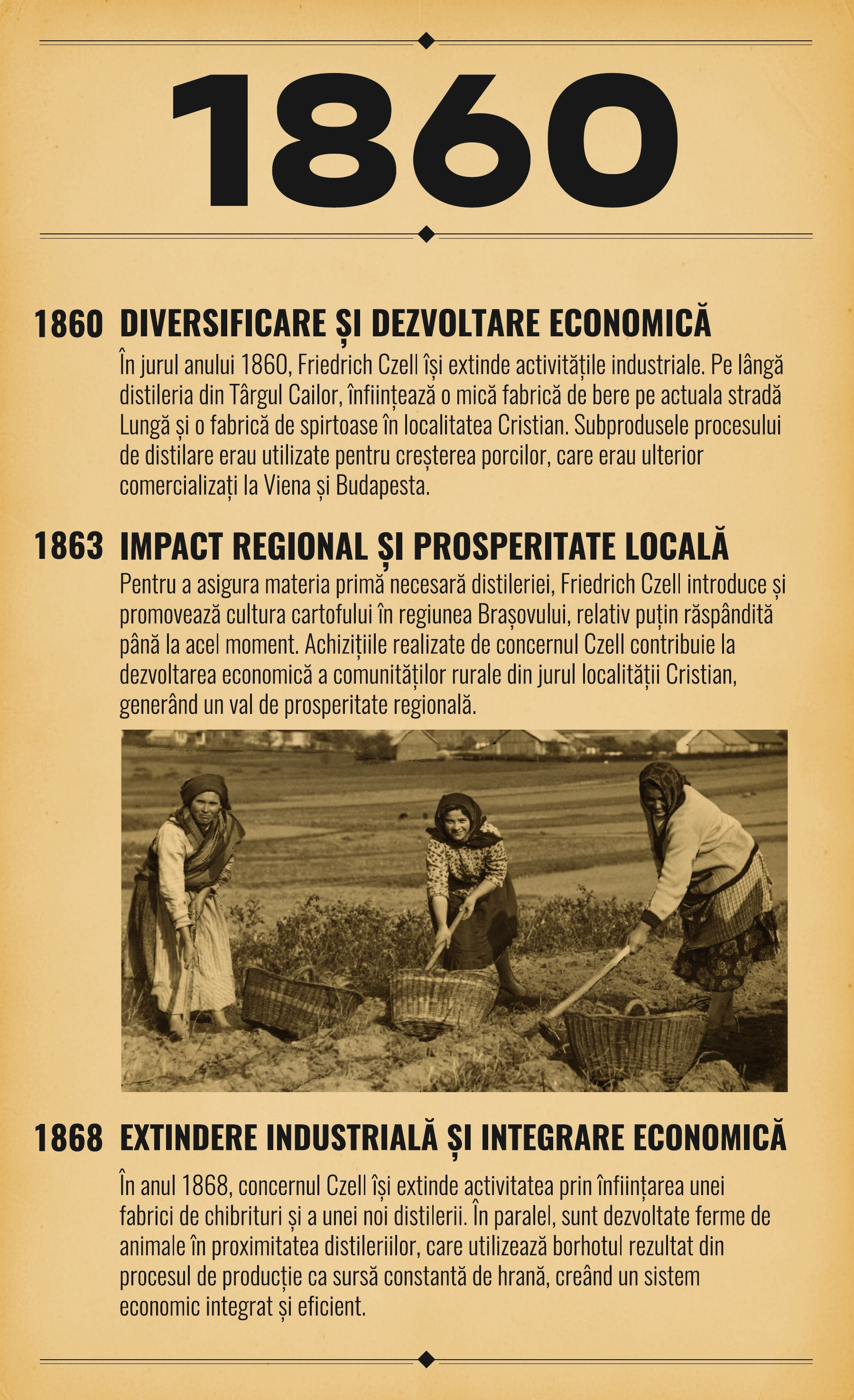
1870
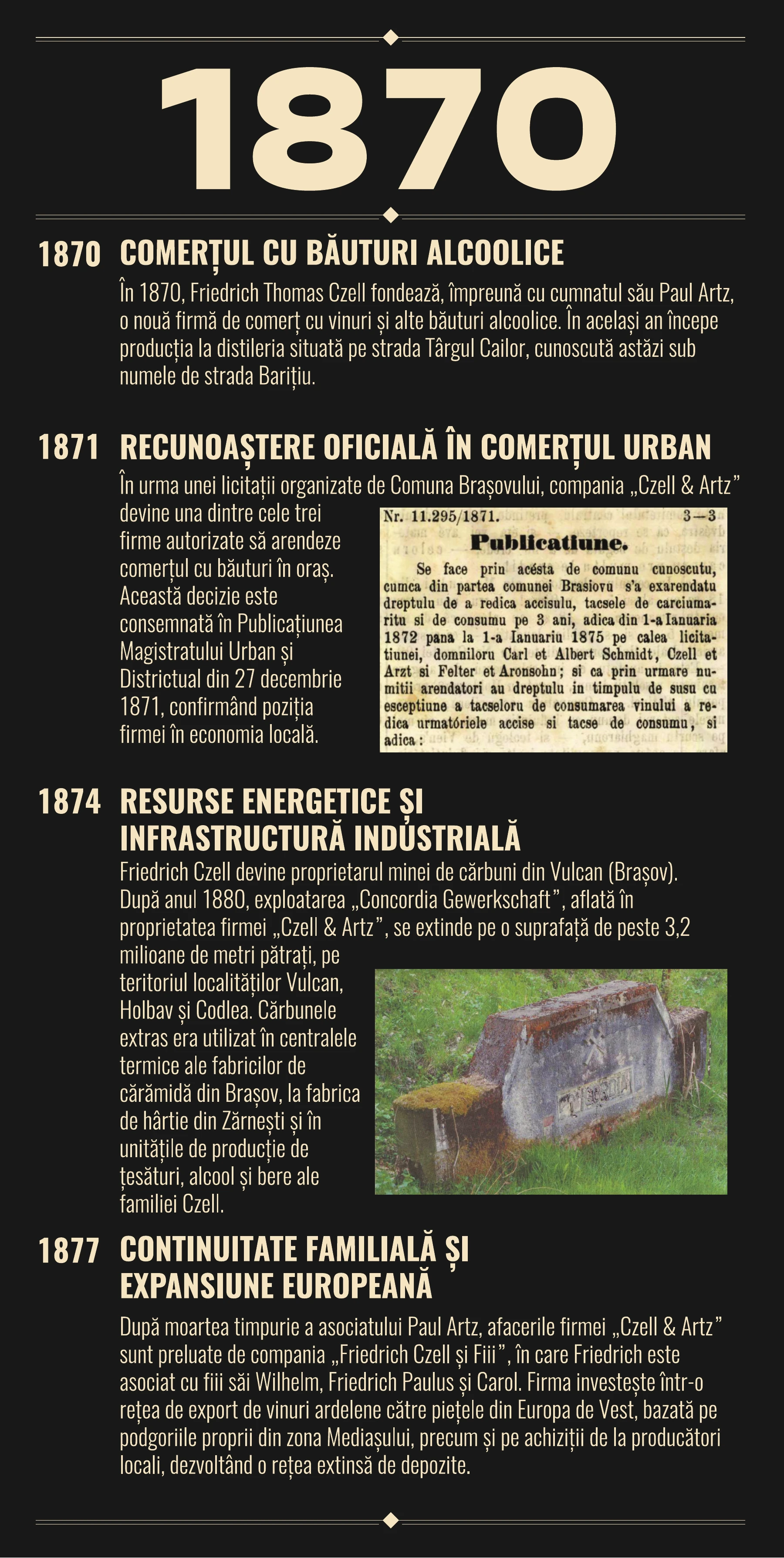
1880
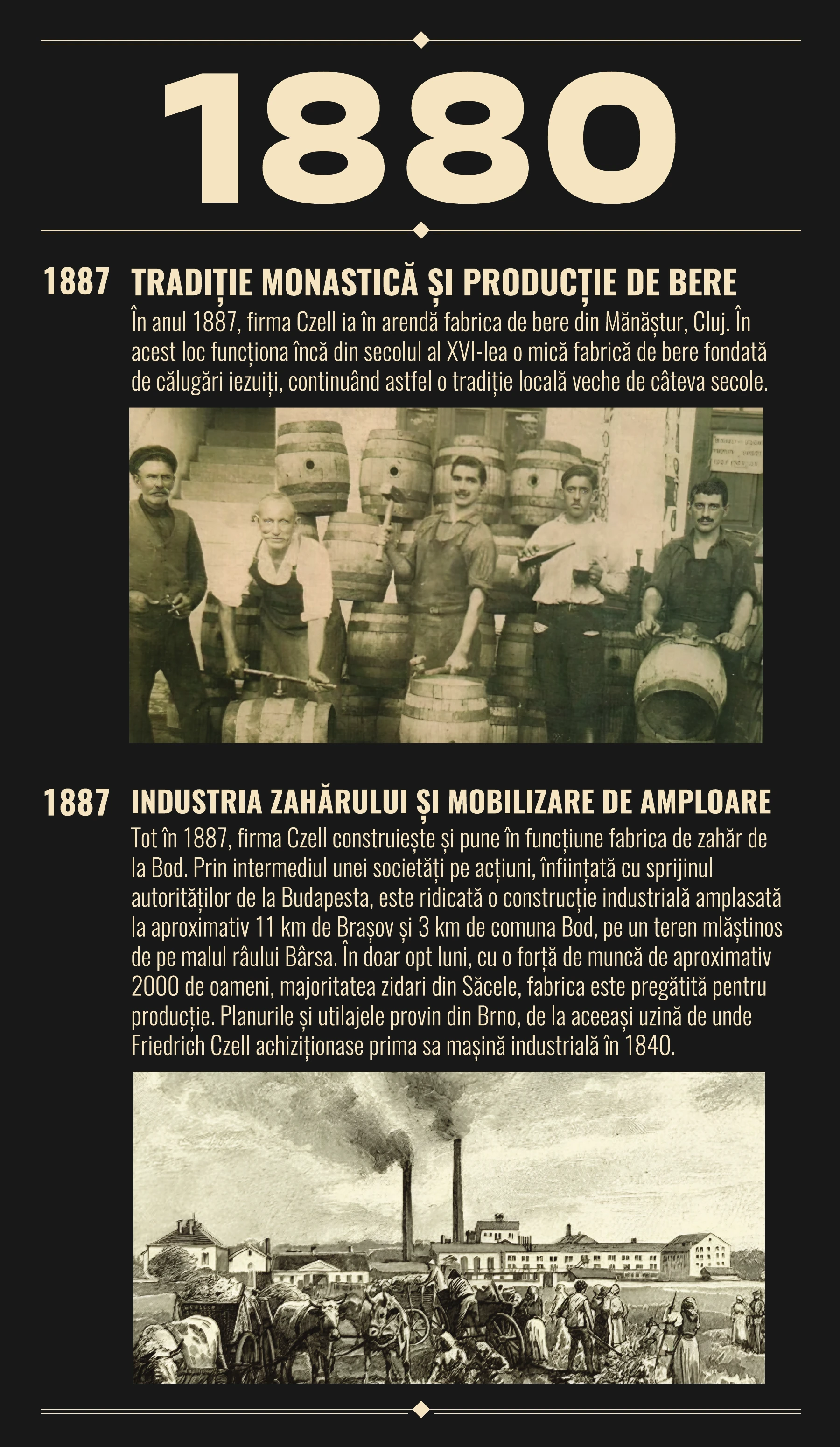
1890
1900
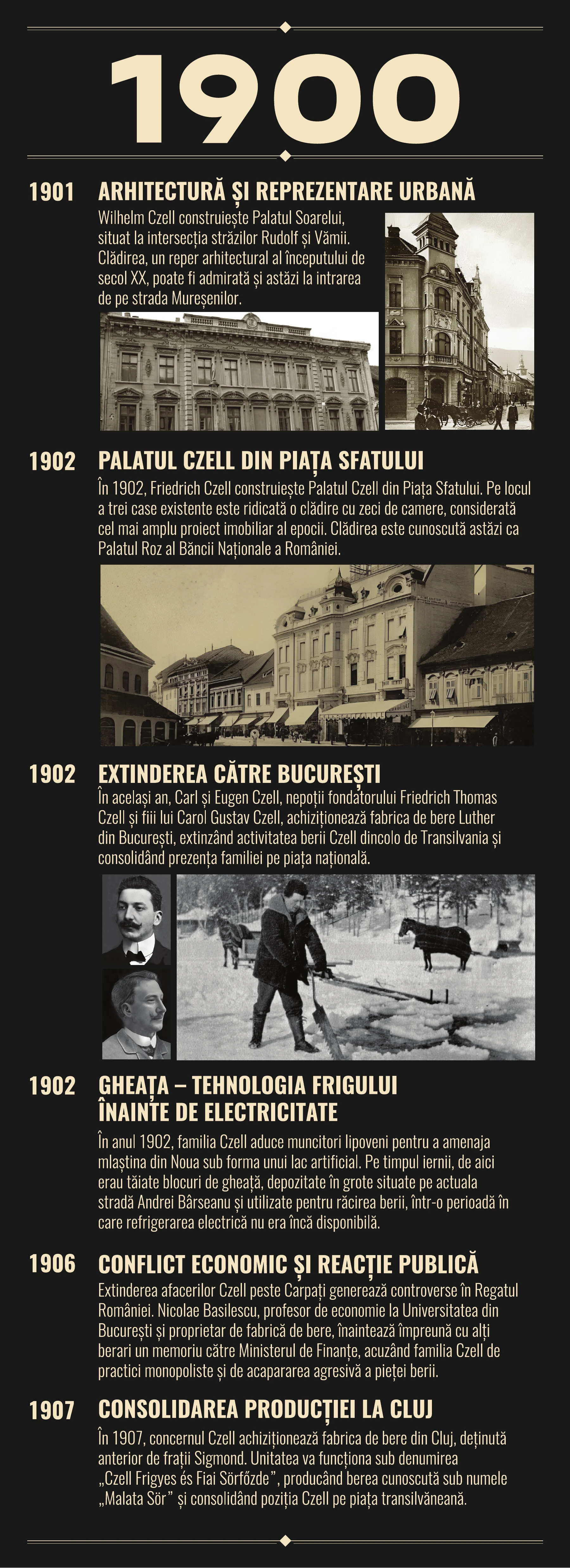
1910
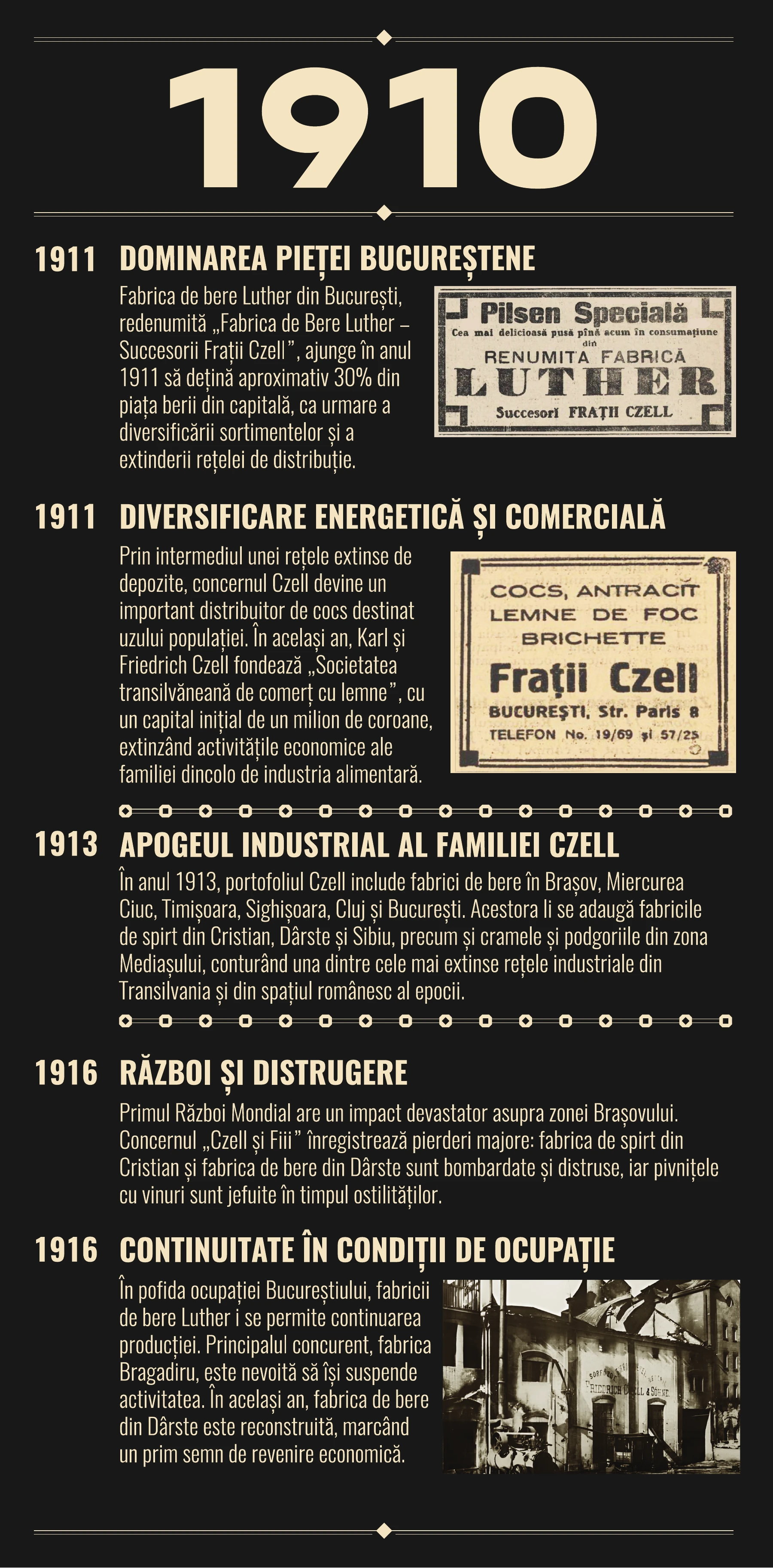
1920
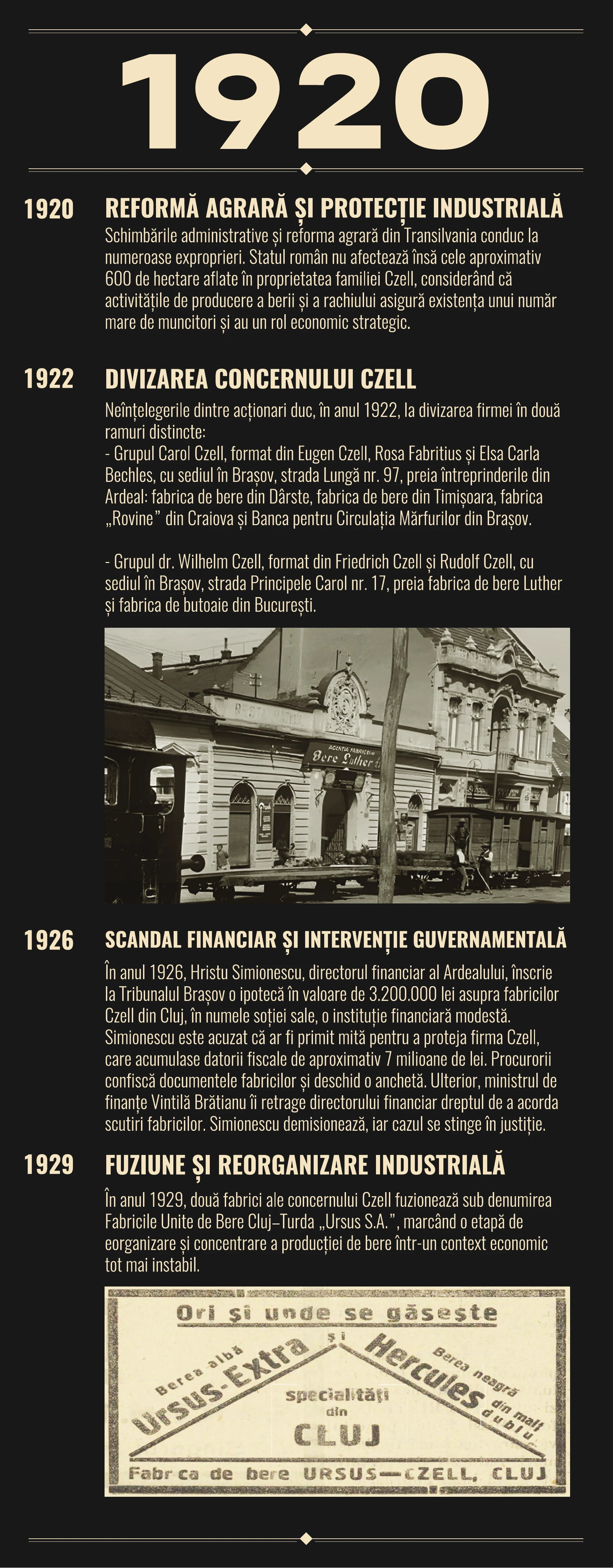
1930
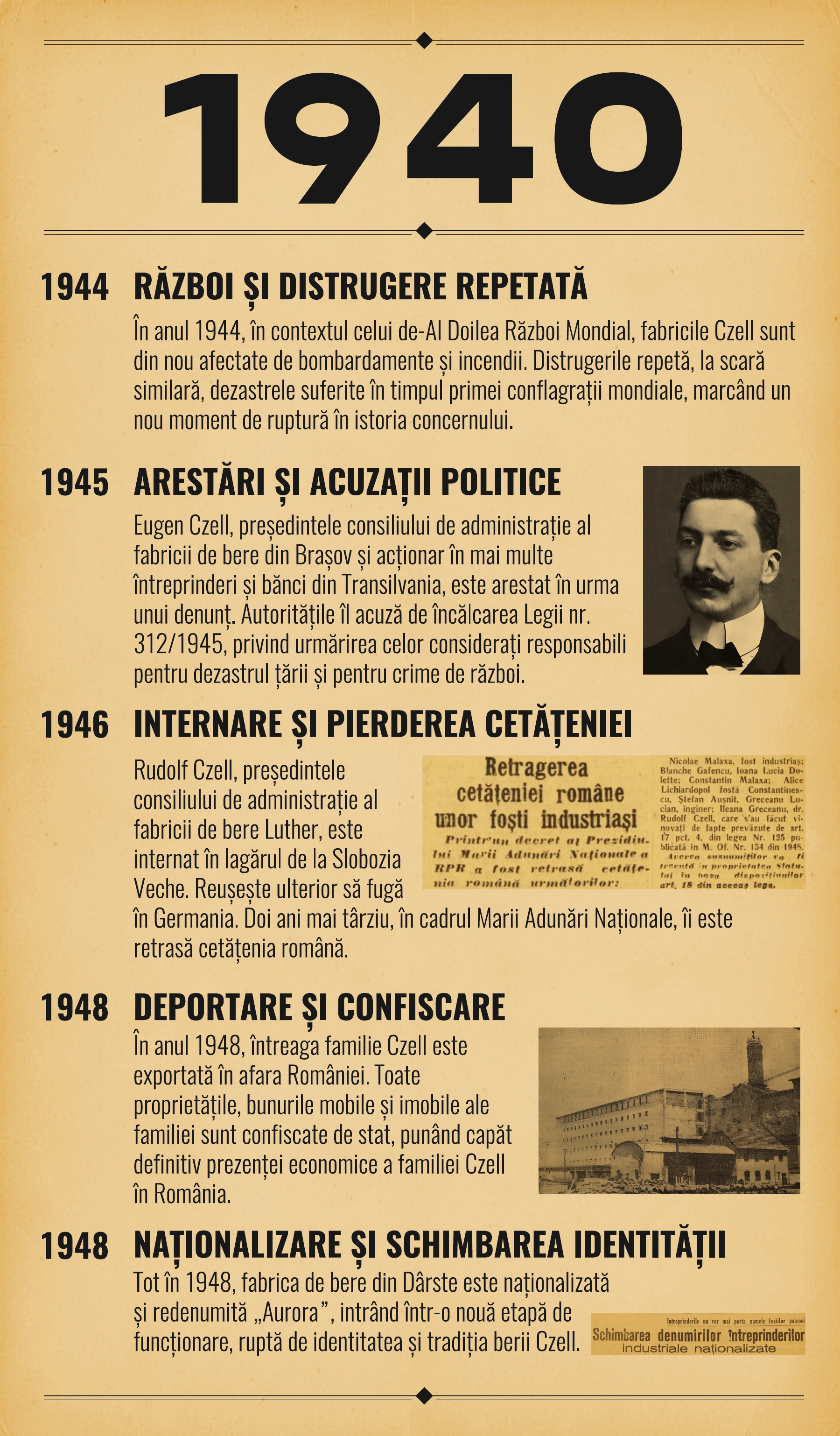
1940
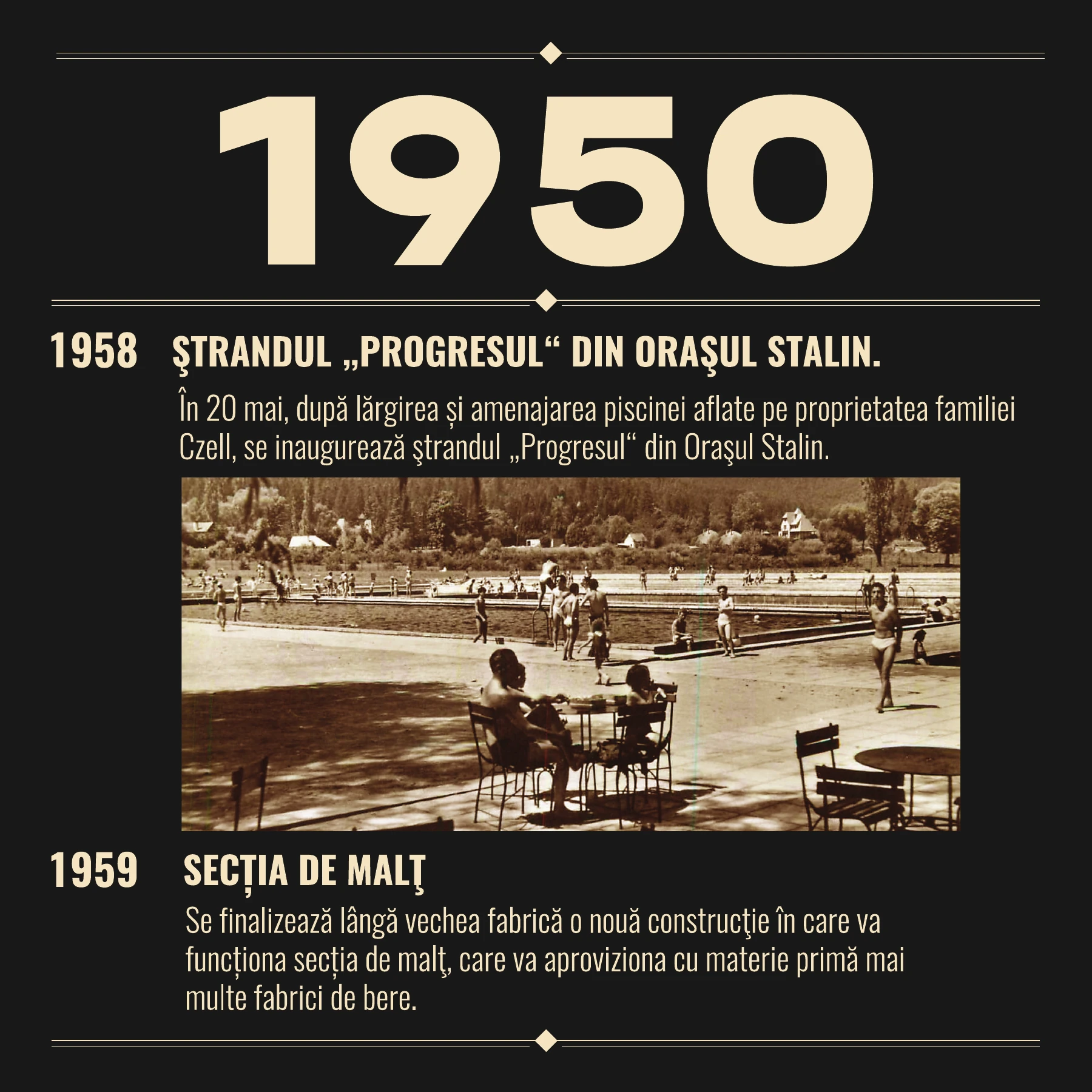
1950
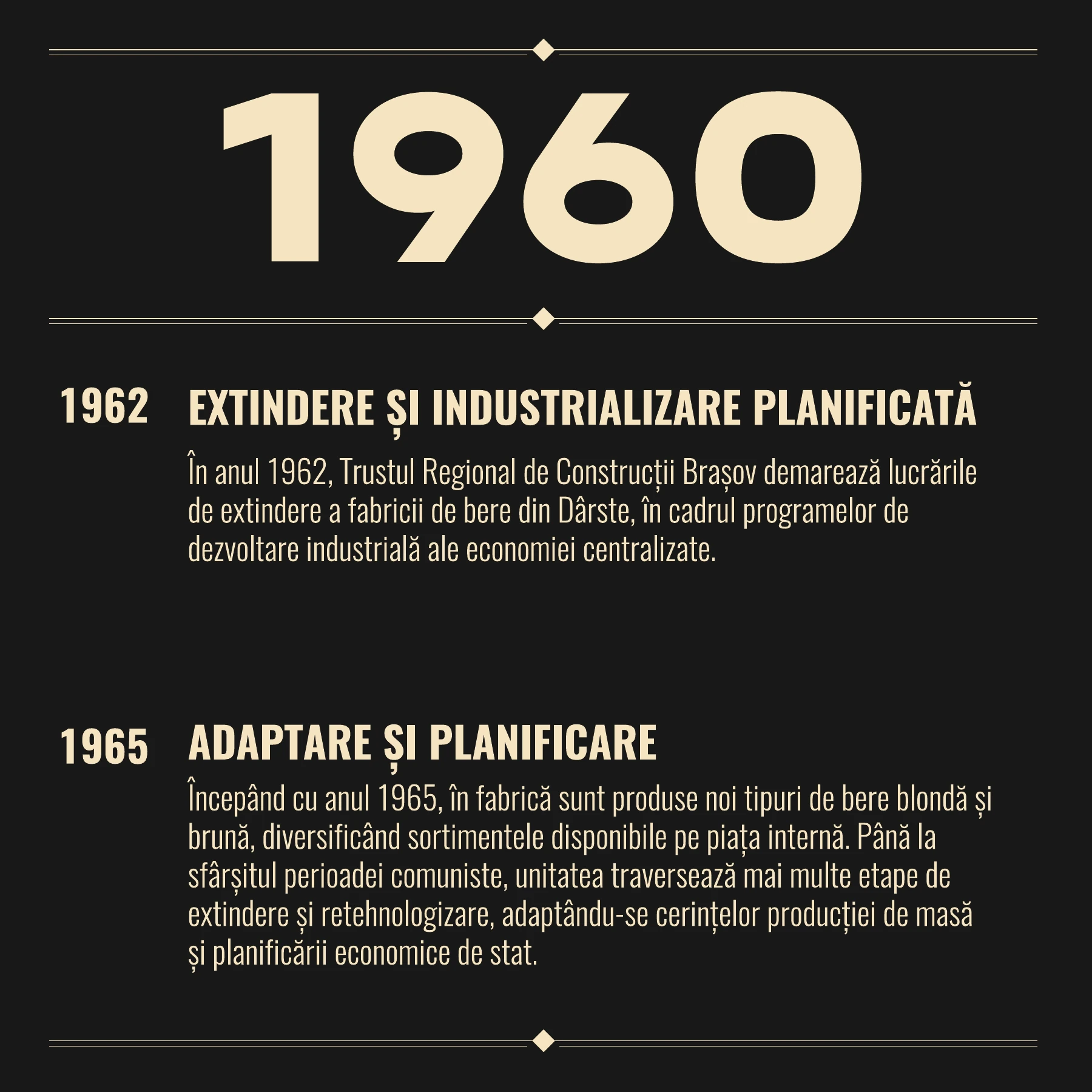
1960
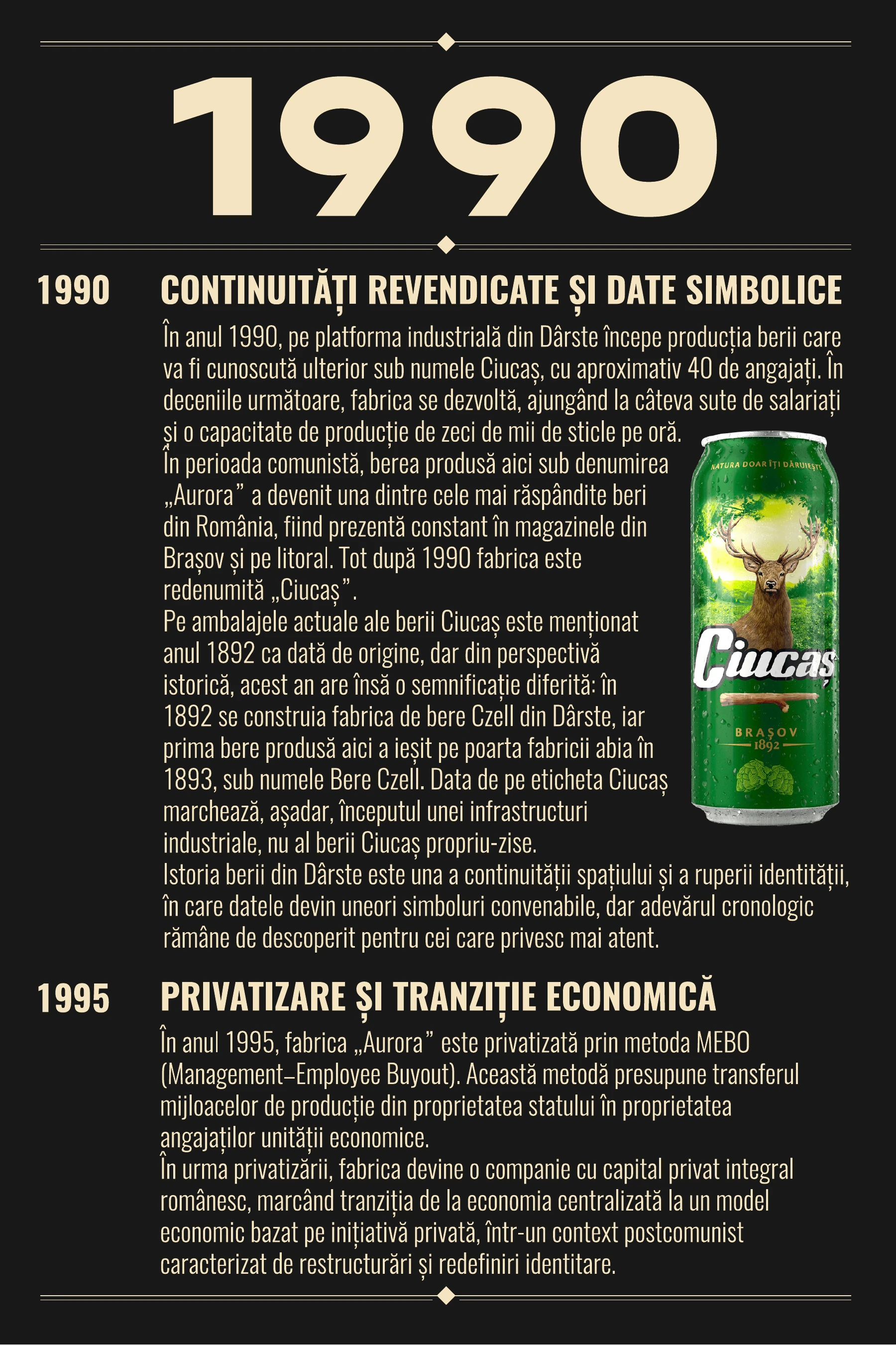
1990
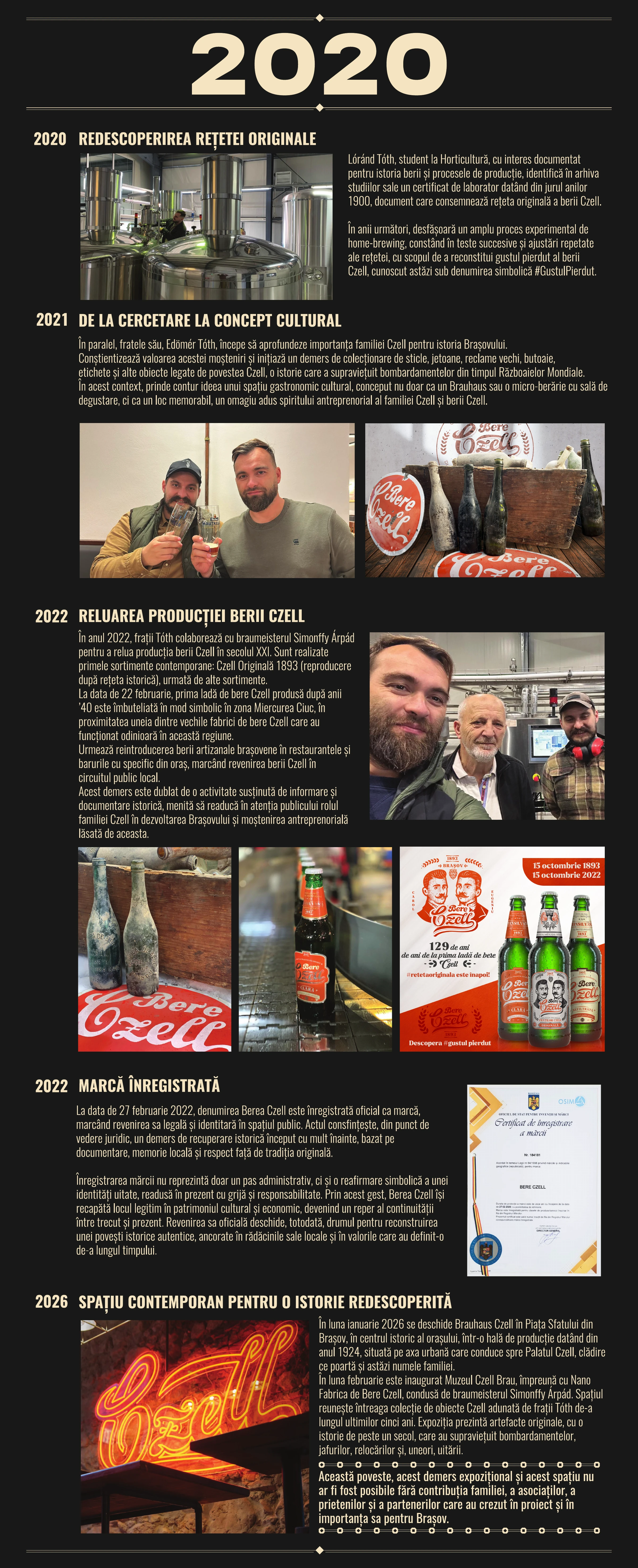
2020
In the family's footsteps
01
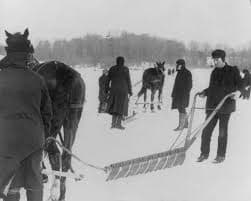
Lake Noua was arranged at the end of the nineteenth century at the initiative of the Czell brothers as a natural ice reserve for cooling beer. During winter, the frozen surface was cut by hand into large blocks and stored in cellars insulated with sawdust and straw, the standard industrial refrigeration method before mechanical cooling.
These blocks of ice ensured controlled fermentation and beer preservation throughout the year.
The Czell family's first beer cellars were dug into the grottos on Andrei Barseanu Street, where constant temperatures and natural ice allowed the beer to mature in optimal conditions.
02
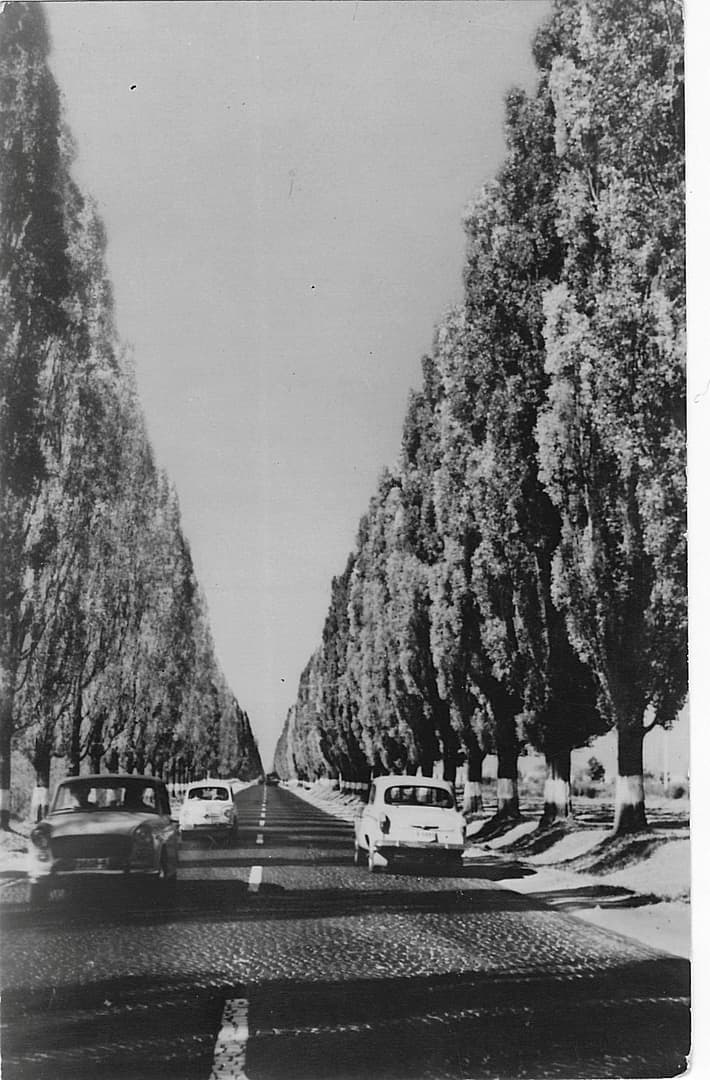
At the end of the nineteenth century and the beginning of the twentieth, a long line of poplars was planted along Calea Bucuresti, attributed to the initiative of the Czell brothers.
Their role was practical: to create permanent shade for transporting beer in barrels towards Brasov's old centre. Protecting the load from direct sunlight helped preserve low temperatures, essential for beer quality before modern refrigeration.
For almost a century, the poplars shaped one of the city's main arteries and became part of Brasov's urban landscape.
After 1989, the alignment was gradually lost due to storms and deforestation, disappearing from much of the contemporary landscape.
03
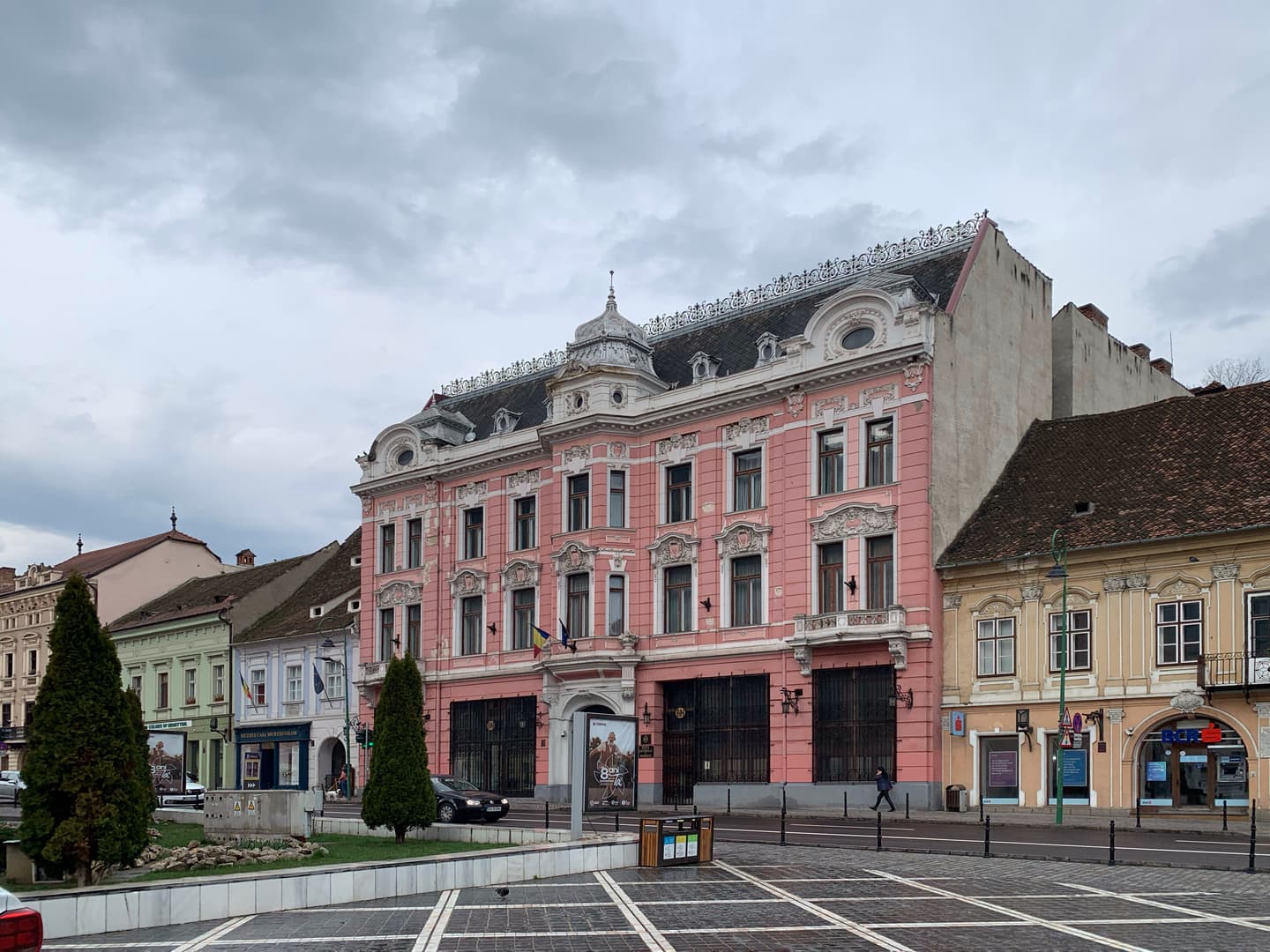
The Czell Palace was built at the beginning of the twentieth century as the urban residence and representative headquarters of the Czell family, reflecting the status of one of Brasov's most important brewing dynasties.
Designed in an eclectic style with secessionist influences specific to the Austro-Hungarian period, the building stands out through its decorative facade, generous volumes and dual role as both residence and business headquarters.
Located on Muresenilor Street, the palace remains an architectural landmark in the historic centre, a witness to the era when the beer industry played a decisive role in Brasov's urban growth.
The legacy
The original recipe returned to the glasses of Brasov.
The story began with an archival document, a fragment of history recovered and transformed once again into living beer.
Today, the Czell legacy can be experienced in full: through documents, period objects and beer recreated using the historic method, in its new home, Czell Brauhaus, in the heart of the city, in Council Square.
Visitors are invited to explore the story, see the heritage and taste its result.
The story goes on
The original artefacts, the documentary and Czell beer at the table, in the historic cellar on Council Square.